
Colonic Irrigation · Brunswick West, Melbourne
Practitioner-led colonic irrigation and colon cleanse
Closed-system colon cleansing and therapeutic infusions, delivered by qualified naturopaths and allied health practitioners in Brunswick West.
What we help with
Common concerns clients come to us with
Open a group to see every condition we've written about. Not sure yours is listed? Ask a practitioner.
Digestive Concerns(3)
+Bloating, constipation and irregularity that's become uncomfortable to live with.
Digestive Concerns(3)



Chronic Gut Issues(4)
+IBS, SIBO, candida and other longer-standing gut patterns.
Chronic Gut Issues(4)




Detox & Wellness(5)
+Support for the body's own elimination processes, and recovery after medication or treatment.
Detox & Wellness(5)





Mood, Skin & Hormones(5)
+Brain fog, low energy, skin congestion, PMS and hormonal balance.
Mood, Skin & Hormones(5)





How it works
Getting started is easy
Five steps from booking to aftercare, including the preparation email we send you before you arrive, so nothing about the day is a surprise.
Step 01
Book online or call
No referral needed, book instantly online 24/7, or call our reception team directly.
Step 02
We email you before your visit
The moment your booking is confirmed we email you how to prepare for your colonic, what to eat and avoid, how much to hydrate, when to stop eating, and what to bring.
Step 03
Pre-session health screening
A confidential review of your health history and any contraindications, either by phone before your visit or in person on arrival. See what your first visit includes.
Step 04
Your closed-system session
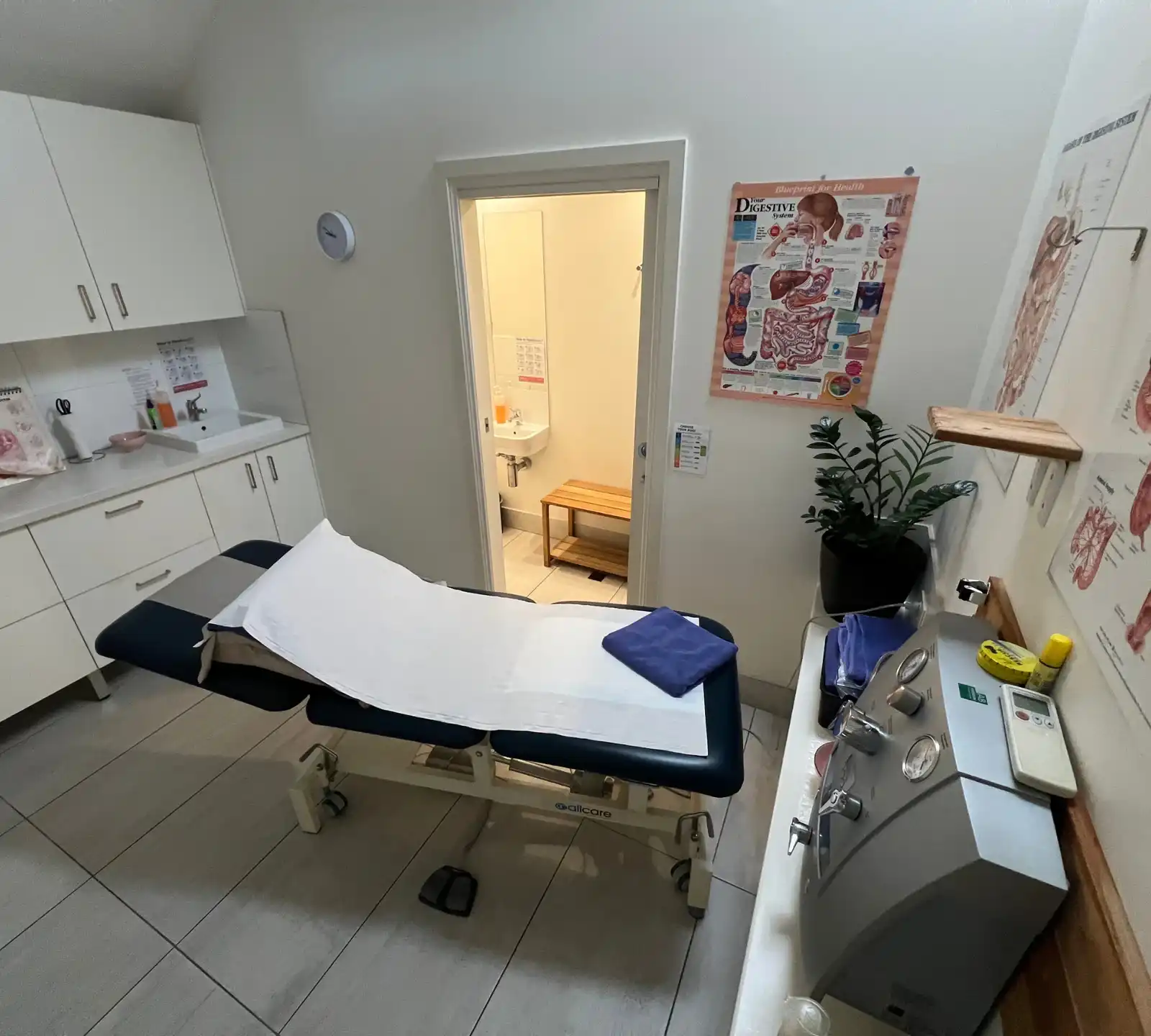
In a private treatment room with its own ensuite, your practitioner adjusts pressure, flow and temperature to suit your body as the session goes, the difference between a closed system and a fixed setting.
Step 05
Leave with a plan
Personalised post-care and hydration guidance, so you know exactly what to expect and how to support your results afterwards.
How we're different
An approach built on genuine qualifications and proper screening
Closed-system colonics
A sealed, practitioner-supervised system throughout, quieter, more hygienic and more discreet than an open setup, with no odour or splashback. Your therapist watches the viewing tube from start to finish, so what passes through is observed and talked through, not just flushed away.
Closed vs open systems →Health practitioners first, colonic-trained second
This field is unregulated. A short course is legally enough to treat you. Everyone here qualified as a health practitioner first, advanced diplomas in naturopathy and myotherapy, a nursing degree with midwifery, remedial massage, so the anatomy, physiology and pathology training came before the colonic certificate. It means what shows in the viewing tube gets interpreted, not just watched, and anything worth your GP's attention is flagged.
See every qualification →No scare tactics
We don't diagnose parasites through a viewing tube or pressure you into extra treatments. Here's what to watch out for elsewhere.
Read about scare tactics →Screened before every session
A full health history and contraindication check before we begin, pressure, flow and temperature stay in the practitioner's hands throughout, never yours.
What to expect →Meet your practitioners
Care from qualified allied health professionals
Every therapist here is also a qualified naturopath, midwife or other allied health professional, not just colonic-certified. All four take new clients, so book with whoever suits your schedule, or tell us what you're working on and we'll match you.

Sara Canney
Colonic Therapist & Naturopath
Constipation, IBS & SIBO, Candida, Bloating, Stress-related gut dysfunction

Carmen Farrugia
Colonic Therapist & Naturopath
Fertility & preconception, Hormonal balance, Antenatal support, Detoxification

Vanessa Bruce
Colonic & Massage Therapist
Bloating, Constipation, Sluggish digestion, Abdominal massage
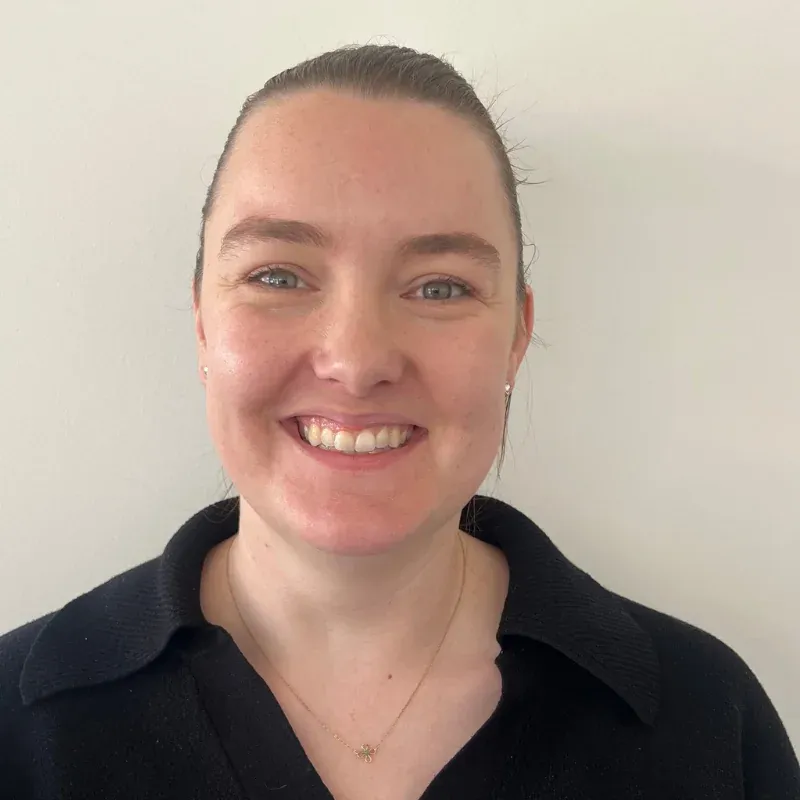
Kass Sidley
Colonic Hydrotherapist
Bloating & gas, Abdominal massage, Digestion & active lifestyle
Not ready to call or book? Drop us a line and tell us what you need help with. We'll come back to you.
See it for yourself
Follow a real client's colonic journey
Curious what a session actually looks like? Watch a real client walk through her experience, from her first visit through to results, with no staging and no script.
Client Reviews
What clients say
“Vanessa you're the bomb! From one colonic hydrotherapist to another, thank you for an awesome treatment today. Technique is spot on, comfortability and compassion is perfect!”
“Sara was lovely and made me feel really comfortable as I was a little nervous and apprehensive. The clinic is really warm, bright, friendly and has a nice chill positive vibe.”
“Very professional, clean, friendly. The results I have had from colonic hydrotherapy have been amazing. I feel like I now have a new life.”
Our infusions
Optional add-ons to your session
Four therapeutic infusions, each matched to a different goal, a $30 add-on, available from your third session onwards. See the full fees.
 Organic Coffee InfusionAn organic coffee infusion during your colonic session, used to support liver detoxification, added from your third session onwards.
 Probiotic InfusionA probiotic infusion introduces beneficial bacteria directly to the large intestine during your colonic session, bypassing stomach acid entirely.
 Turmeric InfusionAn anti-inflammatory turmeric infusion blended with ginger, cinnamon and chamomile, introduced during your colonic session.
 Alkalising Greens InfusionA rehydrating, mineral-rich greens infusion aimed at supporting the body's natural pH balance during your colonic session.
Ready to book your session?
Book online in minutes, or call our reception team directly.
No referral needed, and you can change or cancel up to the day before. Got something to check first? Ask a colonic hydrotherapist.
Before you book
Client FAQs
What is colonic irrigation?
+
Colonic irrigation, also called colonic hydrotherapy, a colon cleanse, or just "a colonic", gently flushes the large bowel with warm, filtered water to loosen and release built-up waste and gas. Our closed-system equipment keeps the whole process sealed, so there's no odour or mess, and a practitioner adjusts it to you throughout. See how it works in full.
Do I need a referral to book?
+
No, you don't need a referral to book a colonic irrigation session as a private client, just book online or call us.
Is colonic irrigation covered by private health insurance?
+
No. It isn't an eligible service category under private health insurance, Medicare or NDIS, even when delivered by a qualified naturopath. See our fees page for what a session costs.
What should I wear to my session?
+
Loose, comfortable clothing. You'll be given a gown to change into for the treatment itself, in a private room with its own ensuite. Full detail is in how to prepare for your colonic.
Find Us
3/68 Melville Road
Brunswick West VIC 3055
Parking, trams & directions →
Clinic Hours
- Monday – Friday
- 8:45am – 7:00pm
- Saturday
- 8:45am – 4:00pm
- Sunday
- Closed
- Public holidays
- Closed
Fees
- Initial & regular sessions: $150
- Infusions: $30 add-on
See full fees →
We're in Brunswick West, and also treat clients from nearby suburbs including Brunswick, Coburg, Moonee Ponds, Essendon and Carlton.
Colonic irrigation is unregulated in Australia
There is no government registration, no minimum training standard and no register of who is practising. A short certificate course is legally enough to perform a colonic on you, and a clinic is under no obligation to tell you that's all its staff hold. Most people booking a colonic have no idea this is the case.
We'd rather you knew, and applied the same four questions to us as to anyone else.
What are they qualified in besides colonics?
A colonic certificate can take a few weeks. It shows someone can run the equipment, not that they can recognise a red flag and make the right call. A prior tertiary qualification in naturopathy, nursing, myotherapy or remedial massage means anatomy, physiology and pathology sit behind that judgement.
Are they a member of a professional association?
Associations set entry requirements, enforce a code of practice, and publish a register you can search. No membership means no external body standing behind their practice.
Will they give you a membership number?
A number you can check on a public register is the difference between a credential and a claim. Anyone unwilling to give you one has told you something.
Do they screen you before treating you?
A full health history and contraindication check should happen before anything begins, every time, not just on a first visit.
Our answers, so you can check them
Every practitioner here holds a qualification in naturopathy, midwifery, myotherapy or remedial massage alongside their colonic certification, listed by name on our team page, along with the association membership every one of them holds, and a membership number for each of them. ATMS publishes an open register you can search by name and number, ours or any other clinic's. MAA and ANTA don't publish one, but will confirm a membership on request, MAA or ANTA. All three have a complaints process an unregulated operator simply isn't subject to.
How to choose a colonic clinic, the full guide →